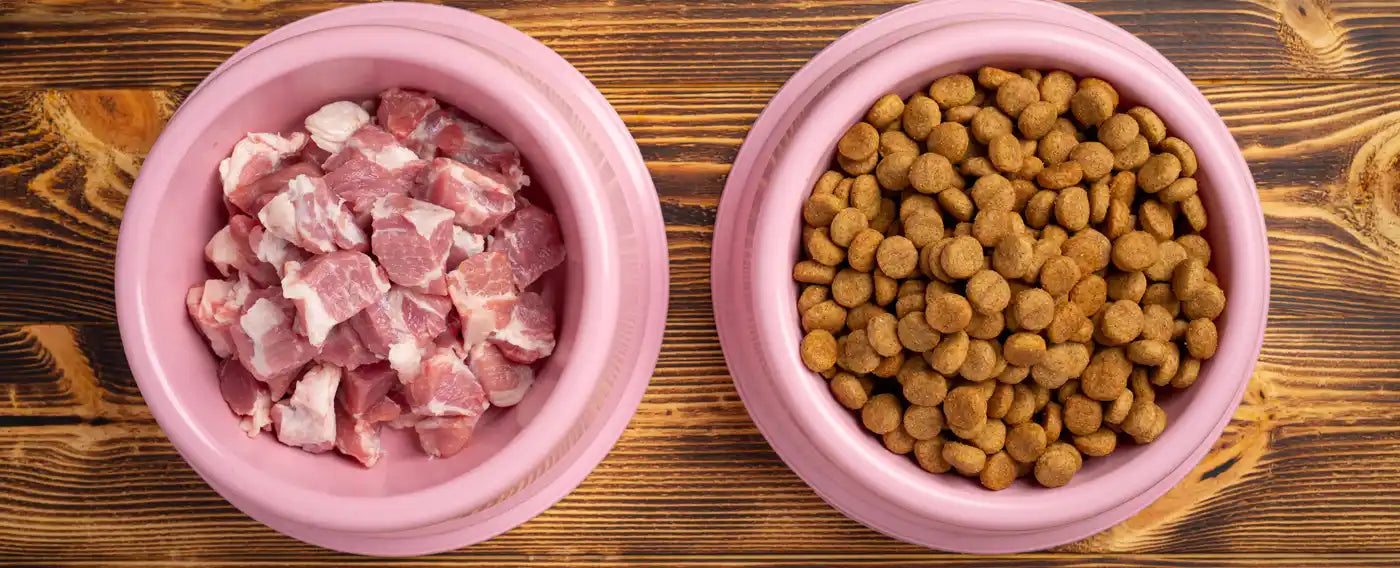
In recent years, the BARF diet for dogs has been getting a lot of attention. Some people see it as the most natural way to feed a dog, while others are more skeptical. As usual, the truth sits somewhere in between — but understanding it properly requires looking a bit deeper.
The BARF diet (Biologically Appropriate Raw Food) is based on a simple idea: feeding dogs raw, unprocessed foods that resemble what their ancestors would have eaten in the wild. This typically includes raw meat, bones, organs, eggs, and a small amount of vegetables. The goal is to reduce or completely eliminate industrial pet food and focus on fresh, whole ingredients.
According to veterinary-informed articles published on platforms like Pazienti.it and Mondopets, this approach can offer real benefits — but it’s not as straightforward as it might seem.
One of the first things many dog owners notice is improved digestion. Because raw food is less processed than kibble, it can be easier for dogs to break down and absorb. This often results in smaller, firmer, and less smelly stools — generally a sign that the body is using nutrients more efficiently.
Another frequently mentioned benefit is improved skin and coat condition. Dogs on a well-balanced BARF diet often develop a shinier coat and healthier skin, likely due to higher-quality fats and proteins.
Some owners also report increased energy levels, with dogs appearing more active and engaged. While this can vary, it’s often linked to overall diet quality.
Finally, there’s a more philosophical but important aspect: many people feel they are feeding their dog in a way that is more biologically appropriate — closer to what dogs are naturally designed to eat.
Here’s the part that often gets glossed over: a BARF diet is not automatically healthy just because it’s “natural.”
The same sources that highlight its benefits also emphasize the risks. One of the biggest concerns is nutritional imbalance. Creating a complete and balanced diet for a dog is not simple — it requires precise proportions of muscle meat, bones, organs, and essential micronutrients. Without proper planning, deficiencies or excesses can easily occur.
Food safety is another key issue. Raw meat can carry bacteria or parasites, which may pose risks not only to the dog but also to humans in the household. This doesn’t mean it’s inherently unsafe, but it does require careful handling and hygiene.
Bones also present a potential hazard. If not selected and managed correctly, they can lead to choking, dental damage, or internal injuries.
The most honest answer is: it depends.
When done properly, a BARF diet can absolutely lead to visible improvements — especially in coat quality, digestion, and overall vitality. However, these benefits are not exclusively tied to raw feeding itself. They are often the result of higher-quality ingredients and the absence of highly processed foods.
In fact, similar results can sometimes be achieved with:
- well-balanced home-cooked diets
- or high-quality commercial dog food
The BARF diet is not a shortcut.
It can be a great option — but only when approached with knowledge, precision, and ideally guidance from a veterinarian with expertise in nutrition.
In other words:
it’s not “natural = better.”
It’s “well-formulated + appropriate = potentially excellent.”